
The Carnivore Autoimmune Protocol (CAIP): A Simple Way to Identify Food Triggers and Support Healing
For many people with autoimmune conditions, chronic inflammation, digestive issues, joint pain, skin problems, migraines, or brain fog, identifying food triggers can feel overwhelming. Traditional elimination diets often remove dozens of foods while still leaving plenty of variables, making it difficult to determine what’s actually causing symptoms.
The Carnivore Autoimmune Protocol (CAIP) takes a different approach.
Instead of starting with a long list of “allowed” foods, CAIP begins with the foods that are least likely to cause an immune reaction. Once symptoms improve, foods are added back one level at a time to identify personal tolerances while keeping nutrition simple.
The goal isn’t to stay on the strictest level forever. The goal is to discover the most varied diet your body can comfortably tolerate.
Why Use the Carnivore Autoimmune Protocol?
Autoimmune diseases occur when the immune system mistakenly attacks healthy tissue. While food isn’t the root cause of autoimmune disease, certain foods can aggravate symptoms in susceptible individuals by increasing inflammation, irritating the gut, or activating the immune system.
Many people notice improvements in:
- Joint pain
- Digestive discomfort
- Skin conditions
- Brain fog
- Fatigue
- Headaches
- Migraines
- Autoimmune flare-ups
- Histamine symptoms
- Water retention
By temporarily removing nearly every potential dietary trigger, you create an opportunity for your body to calm inflammation before systematically testing foods.
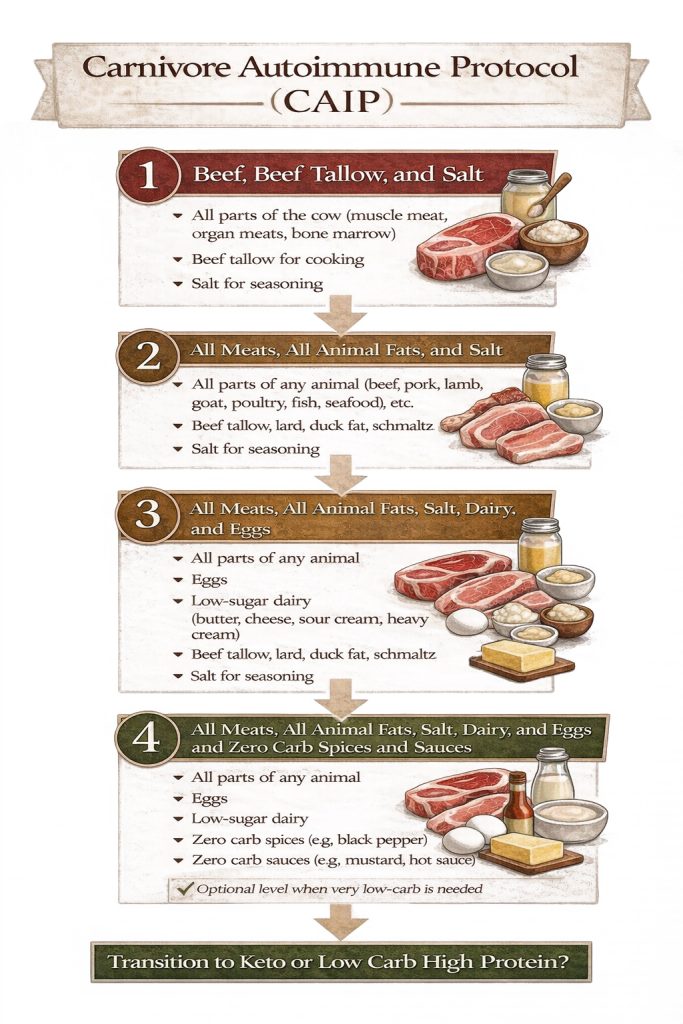
Level 1: The Foundation Reset
Level 1 is the most therapeutic phase of CAIP.
Foods Allowed
- Beef
- Salt
- Beef tallow
That’s it.
This may sound restrictive, but beef provides virtually every essential amino acid, highly bioavailable minerals, B vitamins, iron, zinc, selenium, choline, and healthy saturated fats needed to sustain health during a short-term elimination phase.
Many people choose fatty cuts such as:
- Ribeye
- Chuck roast
- Brisket
- Ground beef
- Short ribs
- Beef shank
- Beef heart (optional)
- Beef liver (optional for additional nutrients)
Cooking fat should remain beef tallow.
Avoid:
- Dairy
- Eggs
- Chicken
- Pork
- Seafood
- Seasonings
- Coffee
- Tea
- Alcohol
- Sweeteners
- Plant foods
- Seed oils
Remain on Level 1 until symptoms have clearly stabilized. For some people this may be two weeks. Others with severe autoimmune conditions may remain here four to eight weeks under medical supervision.
Level 2: Expand to Other Animal Foods
Once symptoms have improved and remained stable for several days, move to Level 2.
Foods Allowed
Everything from Level 1 plus:
- Chicken
- Turkey
- Pork
- Lamb
- Bison
- Venison
- Elk
- Duck
- Goose
- Seafood
- Fish
- Shellfish
- Animal fats
- Bone broth
- Additional simple seasonings if tolerated
The goal here is to determine whether symptoms remain stable while increasing dietary variety.
If symptoms return after introducing a specific meat or seafood, remove that food and allow symptoms to settle before testing another.
Remain at Level 2 for at least one to two weeks before progressing.
Level 3: Add Eggs and Dairy
Eggs and dairy are among the most nutritious foods available, but they’re also among the most common food sensitivities in people with autoimmune disease.
For that reason, they are introduced separately after all meats are well tolerated.
Foods Allowed
Everything from Levels 1 and 2 plus:
Eggs
Test eggs one component at a time when possible.
Start with:
- Egg yolks
Then later:
- Whole eggs
Some individuals tolerate yolks but react to egg whites due to proteins such as ovalbumin.
Dairy
Introduce one dairy food at a time.
Suggested order:
- Butter
- Ghee
- Heavy cream
- Hard cheeses
- Full-fat yogurt
- Cottage cheese
- Sour cream
If symptoms develop, stop the newly introduced food and return to previously tolerated foods until symptoms resolve.
Level 4: Strategic Reintroduction
Once all animal foods have been successfully evaluated, Level 4 allows you to determine whether plant foods can be comfortably included.
Rather than returning to a standard diet overnight, foods are introduced one category at a time.
Suggested order:Low-Toxin Vegetables
Examples:
- Lettuce
- Cucumber
- Zucchini
- Squash
- Mushrooms
Fermented Foods
Examples:
- Sauerkraut
- Kimchi
- Fermented pickles
Berries
Examples:
- Blueberries
- Raspberries
- Strawberries
Nuts and Seeds
Introduce carefully since these commonly trigger symptoms.
Higher-Carbohydrate Fruits
Examples:
- Apples
- Bananas
- Pineapple
Starches
Examples:
- Potatoes
- Sweet potatoes
- Rice
Legumes and Grains
These are typically tested last because they contain more compounds that may irritate sensitive individuals.
Examples:
- Beans
- Lentils
- Oats
- Wheat
- Corn
How to Reintroduce Foods Properly
One of the biggest mistakes people make is adding several foods at once.
If symptoms appear, there’s no way to know which food caused the reaction.
Instead:
- Introduce only one new food.
- Eat a moderate serving.
- Wait 48-72 hours.
- Monitor symptoms carefully.
- If symptoms remain stable, that food can stay in your diet.
- Add the next food.
Keep a simple journal tracking:
- Joint pain
- Digestion
- Skin changes
- Energy
- Mood
- Sleep
- Headaches
- Bowel habits
Some reactions occur immediately, while others may not appear for several days.
What If Symptoms Return?
If you experience:
- Increased joint pain
- Digestive upset
- Skin flare-ups
- Fatigue
- Brain fog
- Headaches
- Autoimmune symptoms
Remove the most recently introduced food.
Return to the last symptom-free level until symptoms resolve.
After several symptom-free days, you may either retest that food or move on to another food category.
Remember that one reactive food does not mean every food in that category will cause problems.
How Long Should You Stay on Each Level?
There isn’t one timeline that works for everyone.
A general guideline is:
- Level 1: 2–8 weeks, or until symptoms have significantly improved and remained stable.
- Level 2: 1–2 weeks while testing additional animal proteins.
- Level 3: Several days to one week between each egg or dairy introduction.
- Level 4: Introduce just one new food every 2–3 days, extending the observation period if you have delayed reactions.
If symptoms are severe or slow to improve, spend more time at each level before moving forward. Patience during the elimination phase often leads to clearer, more reliable results.
The Goal Isn’t Restriction—It’s Personalization
The Carnivore Autoimmune Protocol isn’t about avoiding foods forever. It’s about discovering which foods help you feel your best and which ones may be standing in the way of optimal health.
Many people find they can successfully reintroduce a wide variety of foods, while others discover that only a handful consistently trigger symptoms. That knowledge allows you to build a personalized way of eating based on your own biology rather than guesswork.
By progressing through the four CAIP levels—starting with beef, salt, and tallow, expanding to other animal foods, testing eggs and dairy, and finally reintroducing plant foods one at a time—you create a clear roadmap for identifying food sensitivities while supporting metabolic health and reducing unnecessary inflammation.
Whether you’re dealing with autoimmune disease, digestive issues, chronic pain, or simply want to understand how different foods affect your body, the Carnivore Autoimmune Protocol offers a structured, science-based approach to finding the diet that works best for you.